

✔ Backed by: American Academy of Ophthalmology · National Institutes of Health (NIH) · Occupational Safety and Health Administration (OSHA) · U.S. Food and Drug Administration (FDA). Each fact links to its source, and the full list is at the bottom of this post.
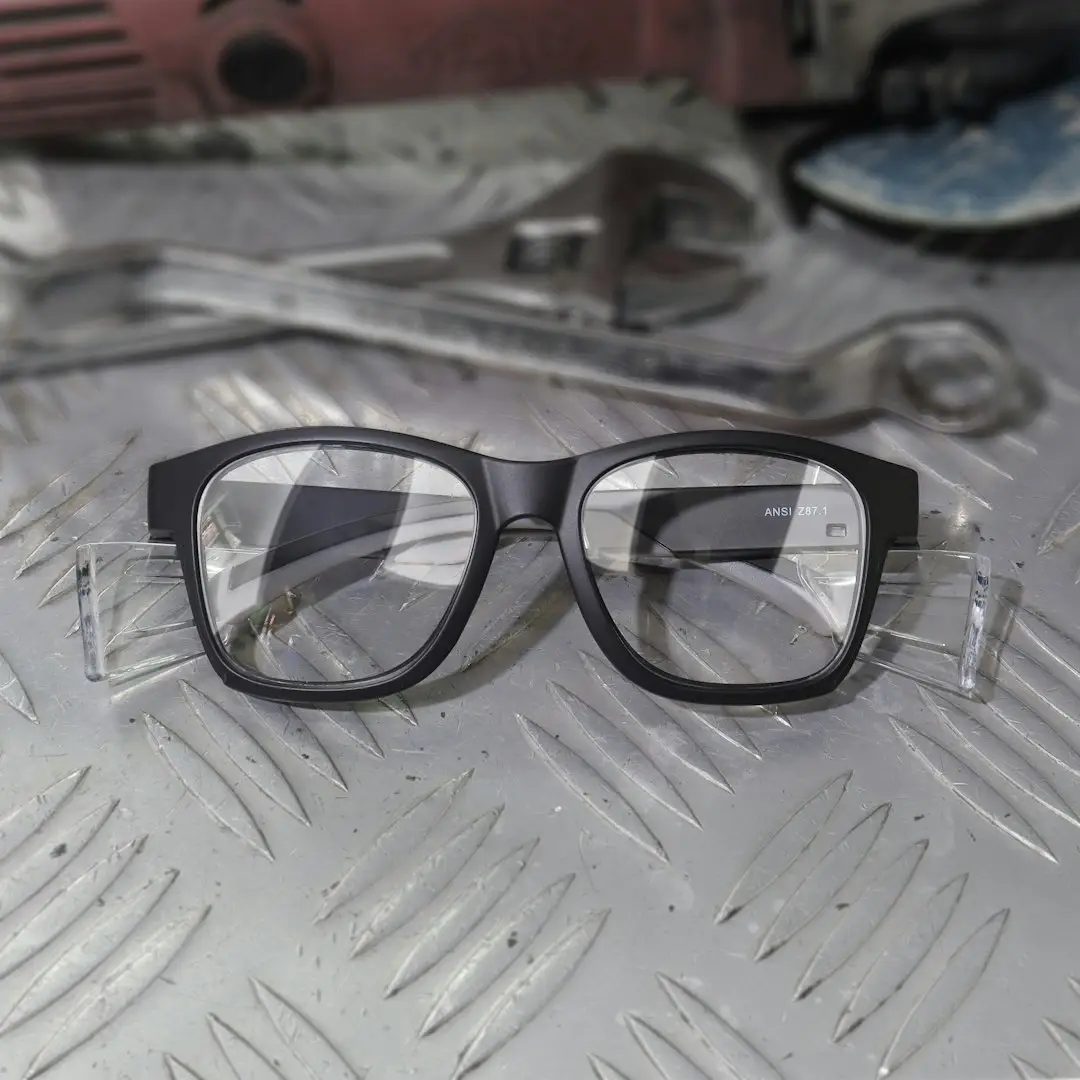
Picture this. It is Saturday morning. You grab the string trimmer to tidy up the yard. Your safety glasses are somewhere in the garage, but it’s “just a quick job.” Five minutes, tops. A small rock flies up, and suddenly that quick job doesn’t feel so small. That is where eye injury prevention comes in.
Most of us have had a moment like that, or a close call. October is Eye Injury Prevention Month, and the good news is simple. Many eye injuries can be prevented by wearing the right protective eyewear [1]. So let’s talk about why we skip it, and how to make it easier not to.
“It’s just a quick job.” Why home is riskier than we think
When we think of eye injuries, we often picture factories or construction sites. But many eye injuries happen at home, during everyday tasks like cleaning, yard work, and repairs [2]. Home feels safe, so we let our guard down.
A few habits go a long way. Wear safety glasses when using tools, mowing, trimming, or using chemicals. Read labels on cleaners, and never mix them. Point spray bottles away from your face. If you have young children or someone at home is at risk of falling, pad sharp furniture corners [2]. A fall can hurt the eye. That is why older adults and others at risk of falls need extra care too [2].
One easy trick is to keep a pair of safety glasses right where you keep your tools. That way, you never have to go looking. What is the one task at your house where you always “mean to” grab the glasses but don’t?
Eye injury prevention in sports: the talk with your kids (and yourself)
Eye injuries are a leading cause of blindness in children in the U.S. [3]. Baseball, basketball, racquetball, squash, hockey, lacrosse, and boxing are high-risk sports for the eyes [3].
Many sports injuries can be prevented with protective eyewear made for the sport, with ultra-strong polycarbonate lenses [3]. Regular glasses, contact lenses, and sunglasses are not enough [3]. If you or your child wears glasses, ask about protective eyewear made to the prescription [3]. And make sure it fits comfortably, or it will end up in the bottom of the bag.
Kids often push back because no one else on the team wears goggles. Imagine a talk like this:
You: “I picked up sports goggles for basketball.”
Your kid: “Nobody else wears those. I’ll look weird.”
You: “I get it. But your eyes have to last your whole life. Want to pick a color you like? Maybe we can ask the coach to make it a team thing.”
Making it a team habit can take the sting out of feeling different. Could you talk with other parents or the coach about it this season?
Eye injury prevention at work: your right to the right gear
Workers around chemicals, flying bits, dust, or other hazards need to protect their eyes [4]. OSHA requires employers to keep workers safe. Employers must provide eye and face protection when it is needed to protect against chemical, environmental, radiological, or mechanical dangers [4].
Some people worry about seeming like a complainer. Asking about safety is not complaining. You can say:
You: “What eye protection should I be using for this job? Mine doesn’t fit well. Is there another size?”
Then wear the gear every time, even for quick tasks.
Halloween, costume lenses, and sparklers
October brings costume parties. Colored or “special effect” contact lenses can look fun, but they carry real risks. All contact lenses must be prescribed by a doctor, including decorative ones [5]. Never buy lenses from a street vendor, beauty supply store, flea market, novelty store, or Halloween store. Lenses without a prescription can cause scratches on the eye, infection, and even blindness. Do your eyes get red or painful, or does your vision get worse? Take the lenses out and see an eye doctor right away [5].
If your teen has their heart set on cat-eye lenses for a party, you might try:
You: “Those would look amazing. But lenses are medical devices, even the costume ones. If you really want them, let’s ask the eye doctor about a prescription pair.”
That keeps the fun and swaps “no” for “let’s do it safely.”
Sparklers seem harmless, too. But they burn at about 1,800 degrees, hot enough to melt some metals. The safest way to enjoy fireworks is to watch a professional show [6]. If a firework hurts an eye, get medical care right away. Do not rub the eye, do not try to rinse it, and do not press on it [6].
When it’s an emergency, don’t wait
When an eye gets hurt, people often think, “Let me just see if it gets better.” Or they don’t want to make a fuss. Please don’t wait. Call 911 or go to the emergency room for a serious eye injury. Keep the person calm and still while you wait for help.
- Chemical splash: rinse the eye with clean water right away for at least 15 minutes, then get emergency care.
- Object stuck in the eye: do not remove it or rub the eye. Cover it gently and get emergency care.
- Cut, puncture, or blow to the eye: do not press on it. Get care right away.
- Sudden loss of vision: call 911 or go to the emergency room.
- Sudden vision change, flashes, or a curtain over your vision: get care the same day [1].
Does everyone in your home know these steps? Save emergency numbers in your phone. Keep cleaners out of children’s reach, with lids closed and labels facing out. These small things help in a hurry.
Let’s talk
Now it’s your turn. We would love to hear from you in the comments below.
What finally got you, or your kids, to wear eye protection?
Have you ever had a close call with your eyes? What did you learn?
What would make it easier for your family or team to wear safety glasses or sports goggles every time?
One Tru Step: Buy or find one pair of safety glasses and keep them with your tools.
Sources and further reading
- American Academy of Ophthalmology: Eye Injury Prevention
- American Academy of Ophthalmology: Eye Safety at Home
- National Eye Institute: Sports and Your Eyes
- OSHA: Eye and Face Protection
- FDA: Decorative Contact Lenses for Halloween and More
- American Academy of Ophthalmology: Fireworks Safety Facts
Sources checked October 10, 2026. General education; individual care and coverage questions require an appropriate professional.
Related Health Hubs
Join the conversation 💬
This is your space. Share a tip that helped you, ask the question you have been wondering about, or cheer on someone going through the same thing. Your comment shows up right away, and no account is needed.
Our house rules (they keep this a feel-good spot): Be kind. Stay on topic. Keep it free of religion, politics, and anything hurtful. Comments that break these rules are removed.
Protect your privacy: Use a first name or nickname, and skip full names, phone numbers, and personal health details.
If you or someone you know is in crisis, call or text 988. In an emergency, call 911.