

✔ Backed by: Centers for Disease Control and Prevention (CDC) · National Cancer Institute · American Cancer Society · National Institutes of Health (NIH) · MedlinePlus · Medicare.gov · Substance Abuse and Mental Health Services Administration (SAMHSA) · U.S. Food and Drug Administration (FDA). Each fact links to its source, and the full list is at the bottom of this post.
Tru-Tips: This one hits home. My father had liver cancer, and before that he lived with fatty liver disease, the inflamed kind called NASH. Walking beside him through his diagnosis and care taught me how much it matters to ask questions early, know your risks, and have someone in your corner. If this post makes you think of your own health, or someone you love, please don’t wait to bring it up.
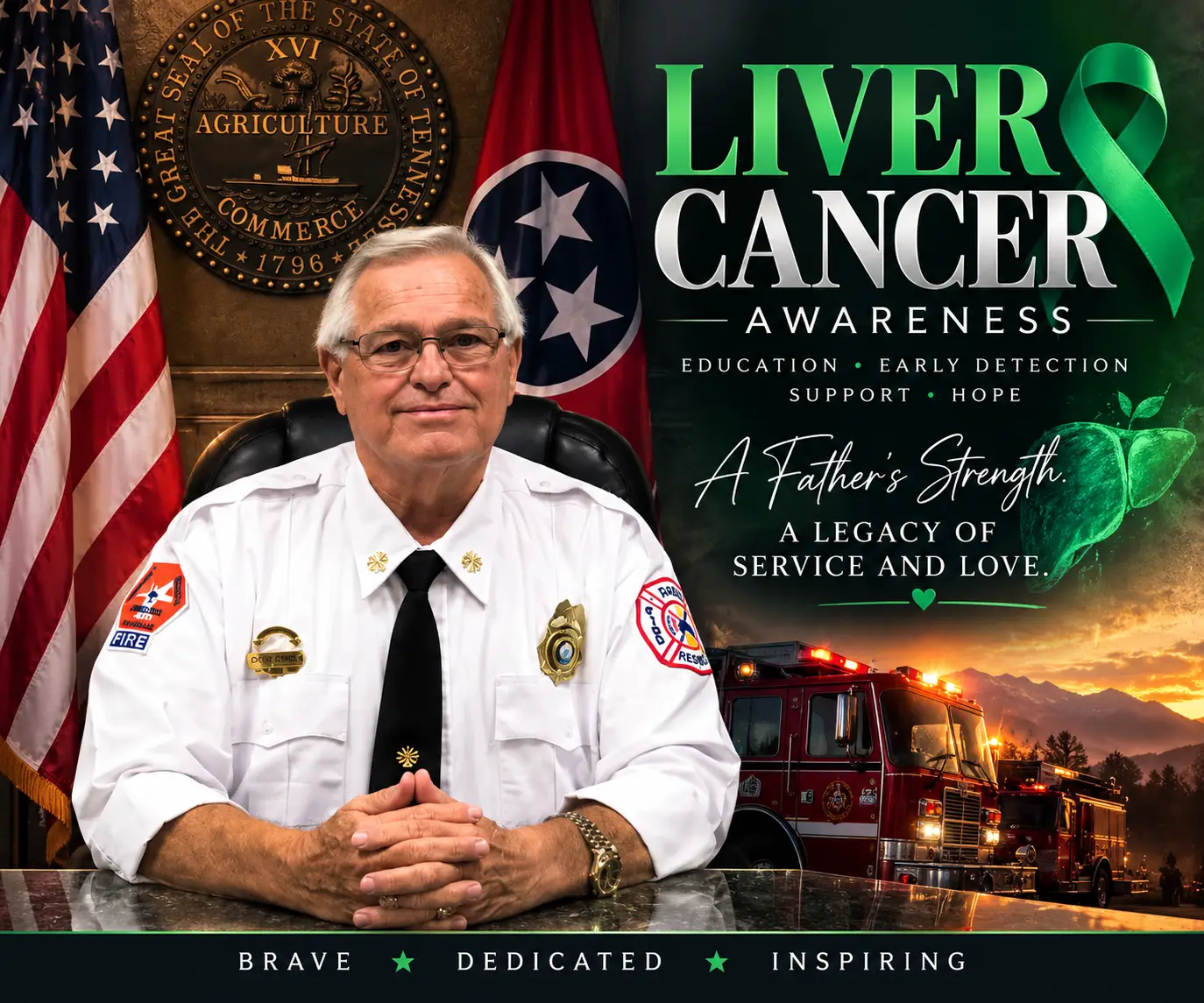
The picture at the top of this post is for my dad, and for every family touched by liver cancer. Fatty liver disease is so common, and so quiet, that most people never think twice about it. I wrote this so that you will.
Picture this. You are at a friend’s backyard party. Someone jokes, “Liver cancer? That’s only for heavy drinkers.” A few people nod. You laugh along, but later you wonder: Is that true? And what about the rest of us?
October is Liver Cancer Awareness Month, so it is a good time to ask. Liver cancer rates have risen in the U.S. over the past decades [1]. That can sound scary. But the hopeful part is that several of the biggest risks are things you can test for, treat, or work on. Let’s talk it through, like two friends at the kitchen table.
“I don’t drink much, so I’m fine.” Is that the whole story?
Alcohol is part of the picture, but it is not the only part. Long-term hepatitis B or hepatitis C infection, heavy alcohol use, fatty liver disease, cirrhosis (scarring of the liver), and smoking all raise the risk of liver cancer [1] [2]. Fatty liver disease is often linked to obesity and type 2 diabetes.
There is another catch. Many people say, “I feel fine.” But early liver cancer often has no symptoms [1]. Later signs can include yellow skin or eyes, belly pain or swelling, weight loss, and feeling full quickly [1]. If you notice any of these, please see your clinician. Don’t wait for it to pass.
Liver cancer can happen to anyone. The National Cancer Institute notes that men are more likely than women to get the most common type. In the U.S., rates are highest among American Indian and Alaska Native people [2]. This is not about blame. It is about everyone getting the chance to ask early.
The hepatitis talk nobody wants to have
For many people, the word “hepatitis” brings up shame. They worry it says something about how they live. Let’s clear that up. CDC recommends hepatitis C testing for all adults at least once [3]. CDC also recommends hepatitis B testing for adults at least once [4]. That means asking is normal. It is a smart, caring step, not a confession.
And here is some truly good news. Hepatitis C can be cured with pills [11]. For hepatitis B, CDC recommends vaccination for adults through age 59 and some older adults [12]. Chronic hepatitis B can be treated, too, and NCI says these treatments may lower the risk of liver cancer [2].
Visits can feel rushed, so it helps to have the words ready:
You: “Have I been tested for hepatitis B and C? Are my results in my chart?”
Then: “Am I up to date on the hepatitis B vaccine?”
And: “Could I have fatty liver disease? Should my liver be checked?”
Fatty liver: the quiet one
Fatty liver disease is now often called MASLD (metabolic dysfunction-associated steatotic liver disease). It is usually silent, with few or no symptoms. Some people feel tired or have discomfort in the upper right side of the belly [10].
You are more likely to have it if you have extra body weight or obesity, type 2 diabetes or insulin resistance, high blood pressure, or high triglycerides or unhealthy cholesterol levels [10]. If any of these sound like you, ask your clinician whether your liver should be checked.
Limiting alcohol, not smoking, and working with your care team on weight, blood sugar, and cholesterol are all ways to look after your liver. Which of these feels most doable for you right now?
If cutting back on alcohol feels harder than it should, you are not alone, and there is no shame in asking for help. SAMHSA’s National Helpline, 1-800-662-HELP (4357), is free, confidential, and open 24 hours a day, every day of the year, in English and Spanish [20].
How a “little fat on the liver” can turn into cancer
This is the part of my dad’s story I most want people to understand. Fatty liver disease is not one single thing. It can move through stages.
It starts with extra fat building up in the liver. The National Institute of Diabetes and Digestive and Kidney Diseases (NIDDK) says about 24% of U.S. adults have this kind of fatty liver disease [26]. For many people, it stays at that stage, with little or no damage.
But for some, the fat brings inflammation and damage. That form used to be called NASH and is now called MASH. NIDDK estimates about 1.5% to 6.5% of U.S. adults have it [26]. Over time, NASH can lead to scarring and then cirrhosis, where the liver is scarred and permanently damaged. NIDDK lists both cirrhosis and liver cancer as complications people with NASH can develop [26].
Here is why that matters. Each step can be quiet. You can feel fine while the liver is changing. That is why a “you have a little fat on your liver” comment on an ultrasound report deserves a real follow-up conversation, not a shrug.
You: “My scan said fatty liver. Do I have the inflamed kind, NASH or MASH?”
Then: “Is there any scarring? How will we keep an eye on it?”
How much weight loss actually helps?
If you have been told to “lose some weight,” it helps to know that you do not have to reach some perfect number. NIDDK says losing at least 3% to 5% of your body weight can reduce fat in the liver, and losing up to 7% to 10% may be needed to reduce inflammation and scarring [27].
To make that real: for someone who weighs 200 pounds, 3% to 5% is about 6 to 10 pounds. Seven to 10% is about 14 to 20 pounds. That can feel a lot more doable than “lose weight.”
Slow and steady matters. NIDDK warns that rapid weight loss and poor nutrition can make liver disease worse. It also says physical activity is good for the liver even without weight loss [27]. A daily walk counts.
What is one small change you could start this week?
Protect the liver you have
If you already have liver disease, a few extra steps can help protect it. CDC recommends the hepatitis A vaccine for people with chronic liver disease, because hepatitis A can hit them harder [28]. Ask whether you are protected against hepatitis A and B.
It also helps to know the warning signs that liver scarring is getting worse. NIDDK notes that early cirrhosis may cause no symptoms at all. As it worsens, signs can include easy bruising or bleeding, swelling in the legs or belly, yellow skin or eyes, dark urine, severe itching, and confusion or trouble thinking [29]. If you or someone you love notices these, call the doctor. Vomiting blood or black, tarry stools need emergency care right away.
Your medicines and a liver scarring test
If you take medicine for high cholesterol or triglycerides, diabetes, or blood pressure, taking it as prescribed is part of caring for your liver. MedlinePlus lists managing diabetes and blood pressure, lowering cholesterol and triglycerides, and taking medicines as directed among the healthy steps for fatty liver [21]. If cost, side effects, or forgetting gets in the way, tell your care team or pharmacist. Please never stop or change a medicine on your own.
There is hopeful news, too. In March 2024, the FDA approved Rezdiffra (resmetirom) for adults with NASH, an inflamed form of fatty liver, who have moderate to advanced scarring but not cirrhosis. It is used along with diet and exercise [22]. In August 2025, the FDA approved Wegovy (semaglutide) for adults with this liver disease, now called MASH, and moderate-to-advanced scarring [23]. You may also hear about tirzepatide (Mounjaro, Zepbound), which acts on two gut hormone receptors, GLP-1 and GIP. The FDA has approved it for type 2 diabetes and weight management [24]. Ask your clinician whether one of these could be right for you.
A FibroScan is a type of elastography, a test MedlinePlus lists for fatty liver [21]. NIDDK explains that transient elastography is a special type of ultrasound that measures how stiff your liver is. A stiffer liver may be a sign of scarring [25].
You: “I keep missing doses of my cholesterol medicine. What could help?”
Then: “Could a medicine like Rezdiffra or Wegovy be right for me?”
And: “Would a FibroScan or another liver scarring test make sense for me?”
Why finding it early matters so much
I want to be honest with you, because honesty is how we take this seriously. Liver cancer is hard to treat once it has spread. The National Cancer Institute reports that when liver cancer is found while it is still only in the liver, about 37 out of 100 people are alive five years later. Once it has spread to distant parts of the body, that drops to about 4 out of 100. Only about 45% of liver cancers are found at that early stage [30].
NCI estimates about 42,340 new cases and 30,980 deaths from liver and bile duct cancer in the U.S. in 2026 [30]. These numbers are averages. They cannot predict what will happen to any one person. But they show why the quiet early stages, fatty liver, hepatitis, and scarring, are the best time to act.
Who needs regular liver checks?
There are no widely recommended liver cancer screening tests for people at average risk [5]. But people with cirrhosis, and some people with chronic hepatitis B, may need an ultrasound every 6 months to look for early liver cancer [5]. For people at higher risk, experts may suggest an ultrasound, sometimes with an alpha-fetoprotein (AFP) blood test. Many people with early liver cancer have normal AFP levels, so the blood test alone is not enough [5].
Screening has limits. A test can look normal when cancer is there, or look abnormal when it is not. An abnormal result often leads to more tests [6]. You can say:
You: “Do I have cirrhosis or another reason to need regular liver checks?”
Then: “If I need screening, how often, and what tests will I get?”
And: “What are the benefits and limits of screening for someone like me?”
If you are nervous about the ultrasound itself, here is what usually happens. You may be asked not to eat or drink for several hours before. You lie down, a clear gel goes on your belly, and a small handheld wand is moved over your skin to make pictures. There is little discomfort [7].
Bringing it up with someone you love
Maybe the person you worry about is your dad, who has diabetes and hasn’t seen a doctor in a while. Imagine a talk like this:
You: “Dad, has your doctor ever tested you for hepatitis?”
Your dad: “Why would I need that? I’m not that kind of person.”
You: “It’s not about what kind of person you are. CDC says every adult should be tested at least once. I asked about mine. Will you ask at your next visit?”
It also helps to make it a shared project. Offer a ride to an ultrasound or follow-up visit. Help keep a list of test dates and results, if they want help. Try healthy changes as a family, like cooking healthy meals together, moving more, and having alcohol-free gatherings.
And if they say, “Stop nagging me”? You might try: “I’m not trying to nag. I just want you around for a long time.”
If the news is “liver cancer,” what comes next?
Nobody is ready to hear those words. If it happens to you or someone you love, take a slow breath. You do not have to understand everything on the first day.
Treatment is not one-size-fits-all. It depends on how far the cancer has spread. Your overall health and how well your liver is working matter, too [14].
Here are some of the treatment types the National Cancer Institute describes, in plain words [13]:
- Surgery to remove the part of the liver that has cancer
- Liver transplant, which replaces the liver with a donated one
- Ablation, which destroys tumors using heat, cold, or other methods
- Embolization, which blocks the blood flow that feeds a tumor, sometimes along with cancer medicine
- Radiation therapy, which aims high-energy rays at the cancer
- Targeted therapy and immunotherapy, medicines that go after cancer cells or help the immune system fight them
Your care team can explain which ones fit you. For some people, joining a clinical trial may be an option, too [13]. A clinical trial is a research study. Some test new treatments, and some look for ways to improve quality of life [13].
You can say:
You: “How far has this spread, and how well is my liver working?”
Then: “What are my treatment choices, and what is the goal of each one?”
And: “Is there a clinical trial that might fit me?”
It is also okay to get a second opinion. The American Cancer Society says it is common, and it is your choice to make. Before you start looking, call your insurance company to find out what your plan covers [15].
Walking beside someone with liver cancer
Sometimes the person with the diagnosis is not you. If so, this part is for you.
One of the most helpful things you can do is show up. Go to appointments if your loved one wants you there. Before each visit, write down the questions you need to ask and the things you want to tell the doctor. Bring all the medicine bottles, or a list of the names and doses [17]. A second set of ears can catch what a worried mind misses.
Here is how that might sound in the exam room:
You: “Could you help us understand who is on the care team, and who we call with questions?”
The oncologist: “Of course. Let me walk you through it.”
You: “Thank you. And could we also talk about palliative care?”
That last question surprises some people. Many think palliative care only means the end of life. It doesn’t. The National Cancer Institute explains that palliative care is care meant to improve quality of life for people with a serious illness like cancer. It can start at any point, from diagnosis on, and people can keep getting cancer treatment while they receive it [16].
Caring for the caregiver
Caregivers often put themselves last. But NCI reminds us that it is important for caregivers to take care of themselves, too [18]. It is common for caregivers to have sleep problems, headaches, and anxiety. Even light exercise, like walking, stretching, or dancing, can help you feel less tired [17].
And please, don’t be afraid to ask for help [17]. People often want to help but don’t know how. Give them something specific, like cooking, shopping, cleaning, or yard work. A call with a sibling might go like this:
You: “I can’t make every appointment by myself anymore. Could you take Dad to his scan on Tuesday?”
Your sister: “I didn’t know it was getting so heavy. Yes. What else can I do?”
You: “Could you bring a meal over on Sundays? That would help more than you know.”
A caregiver support group can help, too. People there talk about their feelings and trade advice [17]. And when questions keep you up at night, the NCI Cancer Information Service is free and confidential. Call 1-800-4-CANCER (1-800-422-6237) on weekdays from 9 a.m. to 9 p.m. Eastern Time, or use their online chat. Help is offered in English and Spanish [19].
Who could you ask for help this week, even with one small thing?
When cost is the worry
If you have Medicare, Part B covers hepatitis C screening for people who meet certain conditions, such as being born from 1945 to 1965 or being at high risk. You pay nothing if your provider accepts assignment [8]. Part B also covers hepatitis B screening for people at high risk and during pregnancy, with the same rule about assignment [9]. A doctor or other provider must order these tests.
If you have other insurance, call the number on your card. You can say: “I’d like to know if hepatitis B and C testing is covered for me, and what I would pay.”
Let’s talk
We would love to hear from you in the comments below.
Did you know about the advice that all adults get tested for hepatitis at least once? What surprised you?
If you have talked a loved one into a checkup, what words worked?
What makes it hard to ask about hepatitis or your liver at the doctor’s office, and what has helped?
If you have cared for someone with cancer, what is one thing you wish someone had told you at the start?
One Tru Step: Ask at your next visit, “Have I been tested for hepatitis B and C?”
Sources and further reading
- CDC: Liver Cancer Basics
- NCI: Liver Cancer Causes, Risk Factors, and Prevention
- CDC: Hepatitis C Testing
- CDC: Hepatitis B Testing and Diagnosis
- American Cancer Society: Can Liver Cancer Be Found Early?
- NCI: Liver Cancer Screening
- MedlinePlus: Abdominal Ultrasound
- Medicare.gov: Hepatitis C Virus Infection Screenings
- Medicare.gov: Hepatitis B Virus (HBV) Infection Screenings
- NIDDK: Symptoms and Causes of NAFLD and NASH
- CDC: Treatment of Hepatitis C
- CDC: Hepatitis B Vaccine Administration
- NCI: Liver Cancer Treatment
- American Cancer Society: Treatment Options for Liver Cancer, by Stage
- American Cancer Society: Seeking a Second Opinion
- NCI: Palliative Care in Cancer
- NCI: Caring for the Caregiver (PDF)
- NCI: When Someone You Love Is Being Treated for Cancer
- NCI: Contact the Cancer Information Service
- SAMHSA: National Helpline
- MedlinePlus: Nonalcoholic Fatty Liver Disease
- FDA: FDA Approves First Treatment for Patients with Liver Scarring Due to Fatty Liver Disease
- FDA: FDA Approves Treatment for Serious Liver Disease Known as “MASH”
- FDA: FDA Approves New Medication for Chronic Weight Management
- NIDDK: Diagnosis of NAFLD and NASH
- NIDDK: Definition and Facts of NAFLD and NASH
- NIDDK: Treatment for NAFLD and NASH
- CDC: Hepatitis A Vaccine Administration
- NIDDK: Symptoms and Causes of Cirrhosis
- National Cancer Institute SEER: Cancer Stat Facts: Liver and Intrahepatic Bile Duct Cancer
Sources checked October 10, 2026; sources 26–30 checked October 18, 2026. General education; individual care and coverage questions require an appropriate professional.
Related Health Hubs
Join the conversation 💬
This is your space. Share a tip that helped you, ask the question you have been wondering about, or cheer on someone going through the same thing. Your comment shows up right away, and no account is needed.
Our house rules (they keep this a feel-good spot): Be kind. Stay on topic. Keep it free of religion, politics, and anything hurtful. Comments that break these rules are removed.
Protect your privacy: Use a first name or nickname, and skip full names, phone numbers, and personal health details.
If you or someone you know is in crisis, call or text 988. In an emergency, call 911.