

✔ Backed by: National Institutes of Health (NIH) · Million Hearts (HHS) · American Heart Association · Centers for Disease Control and Prevention (CDC) · Medicare.gov (CMS) · Health Resources and Services Administration (HRSA). Each fact links to its source, and the full list is at the bottom of this post.
Picture this. You are at a family cookout. Someone passes the potato salad, and your uncle says, “Doctors? I don’t need one. I feel fine.” Everyone laughs and the talk moves on. But maybe a small voice in your head asks, When did I last check my own numbers? That question is where heart health starts.
If that voice sounds familiar, you are not alone. Heart disease is the leading cause of death in the U.S. [5]. That can feel scary. But here is the hopeful part. Key risk factors like high blood pressure, high cholesterol, and smoking are things you can learn about and work on [5]. So let’s talk about heart health, like two friends at the kitchen table.
“But I feel fine.” Why that is not the whole story
“I feel fine” might be the most common thing people say about their health. And feeling fine is great! But it is not the same as knowing. High blood pressure usually has no warning signs, and many people do not know they have it [4].
That is why your numbers matter. Ask your clinician for these and write them down. Start with your blood pressure and your cholesterol (especially LDL, the “bad” cholesterol). Then add your blood sugar (A1C), your body mass index (BMI), and your waist size [1]. Then ask what your goals should be. Good goals are not one-size-fits-all. They depend on your health.
Many people also worry that checking means hearing bad news. That fear is real. But a number is not a judgment. It is information, and information gives you choices. Have you ever put off a checkup because you were afraid of what you might hear?
Heart health questions for your next visit
Visits can feel rushed. Maybe you don’t want to “bother” the doctor, or you forget your questions the minute you sit down. Here is something worth knowing: good care teams want you to ask. A few simple lines can open the door.
You: “Before we finish, can you tell me my blood pressure and cholesterol numbers? I’d like to write them down.”
Then: “What do these numbers mean for me? What goals make sense for me?”
And: “How often should I have these checked?”
If you only have time for one question, try this one: “What one change would help my heart the most right now?” And if you want support, ask, “Is there a program that can help me quit smoking, eat better, or move more?”
It also helps to know a simple way to think about heart health. Million Hearts calls it the ABCS [2]. That stands for Aspirin when appropriate, Blood pressure control, Cholesterol management, and Smoking cessation. One important note: aspirin is not for everyone. Only take it if your clinician recommends it for you.
How to bring it up with someone you love
Sometimes the hardest part is not your own health. It is worrying about someone else’s. Maybe it is a parent, a partner, or a close friend. You want to say something, but you don’t want to nag or start a fight.
Imagine a talk like this:
You: “Dad, when did you last get your blood pressure checked?”
Your dad: “I don’t know. I feel fine.”
You: “I’m glad you feel good. But high blood pressure usually doesn’t cause any symptoms. I’d just feel better knowing your numbers. Could we look into it together?”
Notice what that does. It starts with care, not blame, and it offers to help.
What if they brush it off with “Stop worrying about me”? You might try: “I worry because I love you. I want a lot more cookouts with you.” Or if money seems to be the real worry: “Is cost part of it? Let’s look at options together.”
It also helps to know that heart disease is the leading cause of death for men, women, and people of most racial and ethnic groups in the U.S. [5]. So it is not “just a man’s problem.” Other things can raise risk too, like diabetes, overweight and obesity, an unhealthy diet, not being active, and drinking too much alcohol [5].
Making changes together often works better than telling someone what to do. A family walk after dinner. Cooking with less salt. Offering to keep track of numbers and appointment dates, if your loved one wants help. What would make it easier for your family to talk about health without anyone feeling judged?
Small heart health habits that add up
You don’t have to change your whole life this week. Small steps count. Try moving more on most days. Add more vegetables, fruits, beans, and whole grains to your plate, and use less salt. Get enough sleep. Ask your care team which changes fit you best.
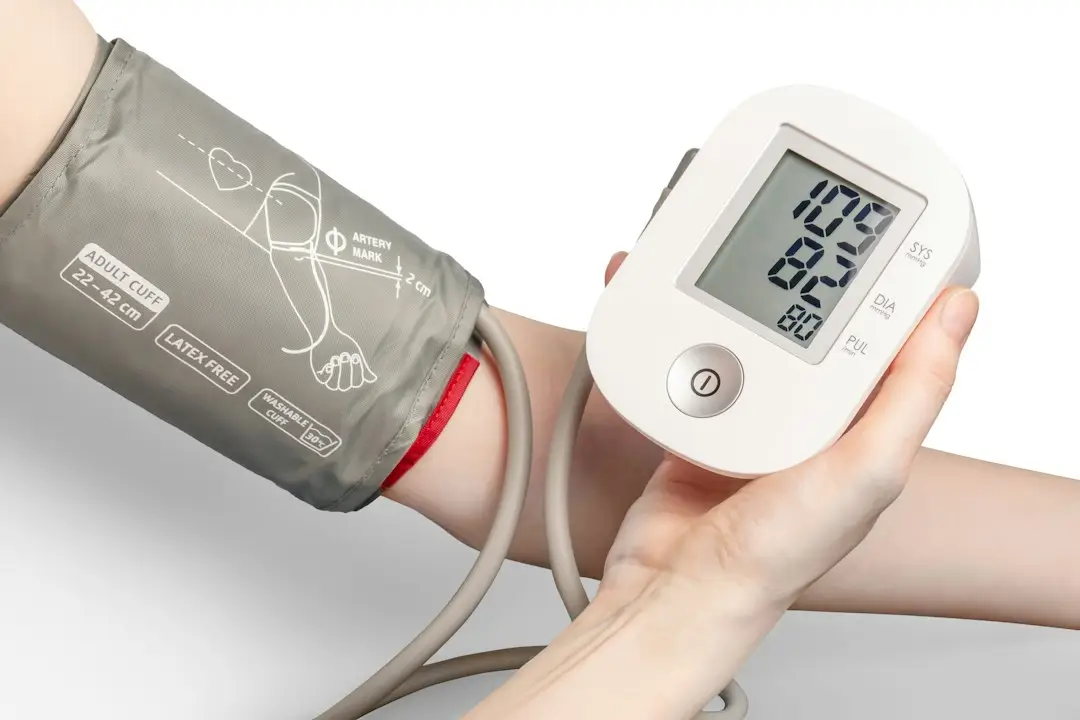
If your care team advises checking your blood pressure at home, CDC has some simple tips [4]. For 30 minutes before, skip caffeine, smoking, alcohol, and exercise. Empty your bladder first. Sit with your back supported and your feet flat on the floor for five minutes, without crossing your legs. Rest your arm on a table at chest height, with the cuff on bare skin. Don’t talk during the reading. Take at least two readings, 1 or 2 minutes apart, and write them down [4]. Ask your care team how often to check, and bring your log to your visits.
Which of these feels easiest for you to start?
When it is an emergency, don’t wait
Many of us think, “I don’t want to make a fuss,” and wait, hoping it will pass. Please don’t. Calling 911 is not overreacting. It is the right call.
Call 911 right away for any of these:
- Chest pain or pressure [3]
- Pain in the arm, back, neck, or jaw; shortness of breath; a cold sweat; nausea; or lightheadedness [3]
- Face drooping: Does one side of the face droop or feel numb? Ask the person to smile [6].
- Arm weakness: Is one arm weak or numb? Ask them to raise both arms. Does one drift down [6]?
- Speech difficulty: Is speech slurred or hard to understand [6]?
That last letter, T, means Time to call 911. If you see any stroke signs, even if they go away, call 911 [6]. And for heart attack signs, do not drive yourself [3].
One more thing many people don’t know. A heart attack doesn’t always look like it does in the movies. Chest pain or discomfort is the most common sign for both men and women. But women may also have other symptoms, like shortness of breath, nausea, unusual tiredness, an upset stomach, or back or shoulder pain [3]. Does everyone in your home know these signs? Teaching them might be one of the kindest things you do this year.
When cost is the worry
For a lot of people, the real reason they skip checkups is money. If that is you, there is no shame in it.
If you have Medicare, Part B covers blood tests for cholesterol, lipids, and triglycerides once every 5 years. You pay nothing for these tests if your provider accepts assignment [7].
If you don’t have insurance, or your coverage is thin, look into health centers. They provide primary care to people of all ages, whether or not they have health insurance. Fees are on a sliding scale based on your ability to pay. You can find one at findahealthcenter.hrsa.gov [8]. You can also ask your local pharmacy whether it offers blood pressure checks.
Let’s talk
Now it’s your turn. We would love to hear from you in the comments below.
What’s one thing that finally got you, or someone you love, to check your numbers?
If you have ever talked a parent or partner into a checkup, what words worked? What didn’t?
What makes it hard to ask questions at the doctor’s office, and what has helped you speak up?
One Tru Step: Find your last blood pressure and cholesterol numbers today, or schedule a visit to get them.
Sources and further reading
- NHLBI: Numbers to Know for a Healthy Heart
- Million Hearts: ABCS of Heart Health
- American Heart Association: Warning Signs of a Heart Attack
- CDC: Measure Your Blood Pressure
- CDC: Heart Disease Facts
- American Heart Association / American Stroke Association: Spot a Stroke F.A.S.T.
- Medicare.gov: Cardiovascular Disease Screenings
- HRSA: Get Health Care
Sources checked October 10, 2026. General education; individual care and coverage questions require an appropriate professional.
Related Health Hubs
Join the conversation 💬
This is your space. Share a tip that helped you, ask the question you have been wondering about, or cheer on someone going through the same thing. Your comment shows up right away, and no account is needed.
Our house rules (they keep this a feel-good spot): Be kind. Stay on topic. Keep it free of religion, politics, and anything hurtful. Comments that break these rules are removed.
Protect your privacy: Use a first name or nickname, and skip full names, phone numbers, and personal health details.
If you or someone you know is in crisis, call or text 988. In an emergency, call 911.