

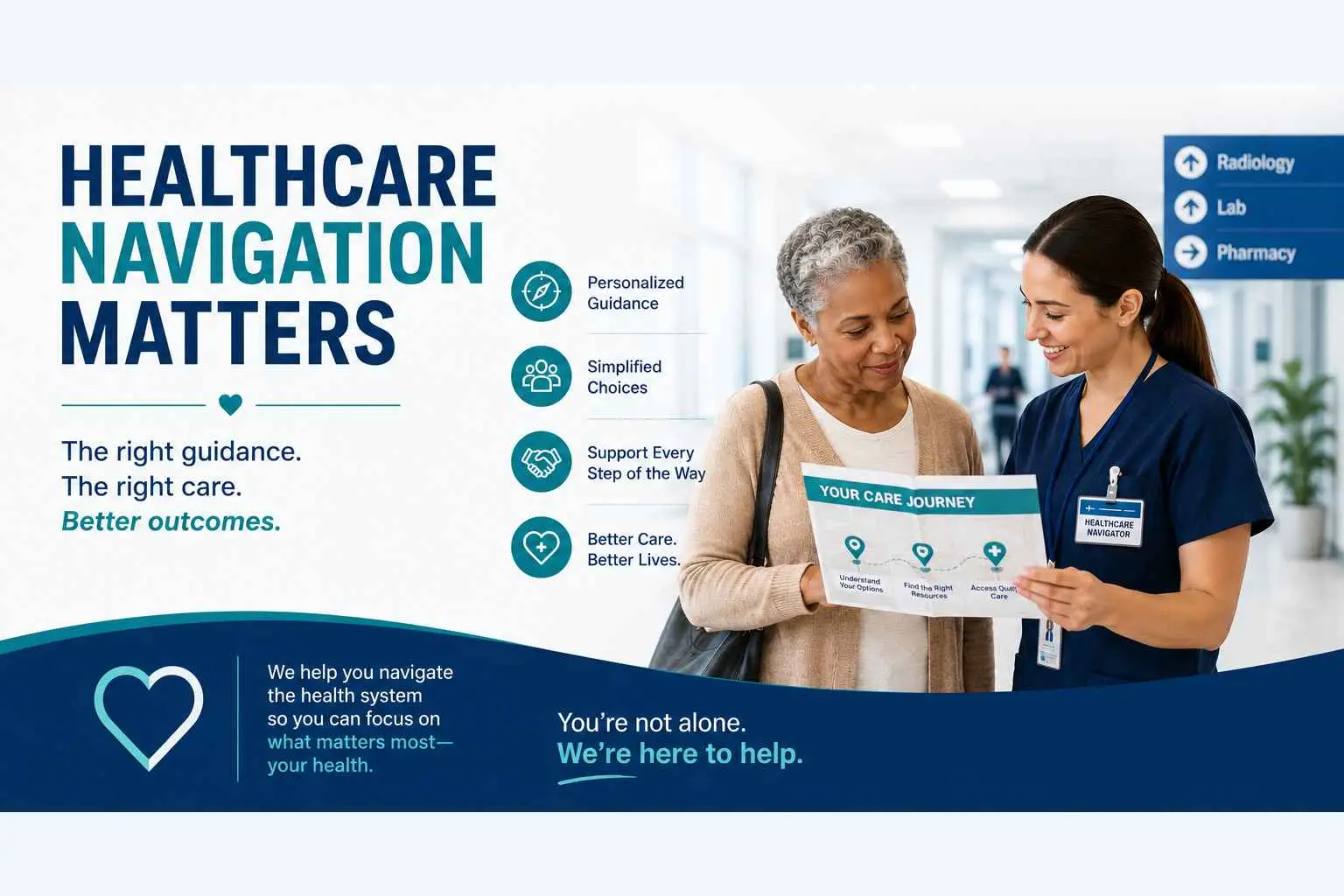
Why healthcare navigation matters more than ever
Healthcare today is more advanced than ever. That makes healthcare navigation more important than ever, too. New medicines arrive quickly, treatments keep improving, and technology is changing how and where care happens. Patients have more options than at any point in history.
Yet one problem keeps growing: healthcare has become hard to navigate. For many patients and families, simply figuring out the next step can feel overwhelming. That confusion can lead to delayed care and mix-ups with medicines. It can also mean missed appointments, avoidable trips back to the hospital, and a lot of stress.
The system wasn’t built to be simple
Most of us don’t realize how many moving parts are involved until we live through it. One person might be juggling a primary care doctor and several specialists. Add insurance approvals, prescriptions, and pharmacy refills. Then come lab work and scans, follow-up visits, home health, medical equipment, and a stack of hospital discharge papers.
Now picture managing all of that while you’re sick, in pain, or worried. Maybe you’re also caring for an aging parent or holding down a job. Or maybe you’re stretching a tight budget and trying to find a ride to your next appointment. That’s real life for millions of people every day.
Patients are often expected to be their own care coordinators
One of the biggest gaps in healthcare is that patients and families are often left to connect the dots themselves. They’re the ones keeping track of medicines and decoding discharge instructions. They make sure one doctor knows what another one said. They also remember appointments, learn insurance rules, find transportation, and search for financial help.
Without guidance or simple tools, that work gets exhausting. It’s especially hard for older adults and for people living with chronic illness or cancer. It’s also hard for people recovering after a hospital stay, those managing several conditions at once, and the caregivers who support them.
Why better navigation matters
When people understand their care plan, they’re in a better position to show up for follow-up visits and take medicines as prescribed. They can also notice when symptoms are getting worse, ask good questions, and use the resources available to them.
So healthcare navigation isn’t just about convenience. It can shape the quality of care someone receives, how that care feels, and how well they do over time.
The rise of patient activation
Healthcare is moving toward a more patient-centered model. Health systems and health plans are putting more attention on education, prevention, and care coordination. They also want smoother transitions after a hospital stay and fewer hospital visits that didn’t need to happen.
At the heart of that shift is something called patient activation. An activated patient understands their health conditions and takes part in decisions about their care. They also stay connected with their care team and use resources well. Most of all, they feel empowered instead of overwhelmed.
Activation doesn’t happen on its own, though. It takes tools, clear education, and real support. That’s where SynquUp aims to help.
Why getting organized matters
Organization is one of the most overlooked tools in healthcare. For example, keep your medicines, appointments, insurance details, symptom notes, and questions for your doctor in one place. That simple step can cut down on confusion and help you stay engaged.
Good self-organization tools are designed to give people a sense of control during some of the hardest moments of their lives.
Healthcare is moving beyond the hospital walls
The future of healthcare isn’t only about what happens inside a hospital or clinic. More and more, it’s about what happens at home and after discharge. It’s also about the weeks between appointments, when people manage their care on their own.
Those in-between moments are where healthcare navigation, education, and activation tools matter most.
The future of healthcare navigation
The healthcare industry is starting to see that navigation support is no longer optional. As care becomes more complex, people need simpler guidance and easier access to resources. They also need better education and tools that fit their own situation.
The organizations that make care easier to navigate, and help patients stay engaged, are likely to lead the next chapter of healthcare.
Moving forward together
At SynquUp, we believe healthcare should feel more connected, understandable, and manageable. Our mission is to make healthcare navigation simpler. We do that by supporting patient activation, self-organization, and access to the resources people need.
Because when patients are better informed and better organized, everyone benefits. And this is only the beginning.
Ready for a next step in your own healthcare navigation? Try the SynquUp Care Navigator, or start with our Insurance and Medicare Hub. For help talking with your care team, the Agency for Healthcare Research and Quality also offers a guide to questions to ask after your appointment.
that is amazing, Chuck. You will change a lot of lives hopefully