

✔ Backed by: U.S. Food and Drug Administration · Medicare.gov (Centers for Medicare & Medicaid Services). Each fact links to its source, and the full list is at the bottom of this post.
Maybe this has happened to you. You pick up a refill, open the bag, and the pill is a different color than last month. Or the pharmacist asks, “Is a generic okay?” and you are not quite sure what you are agreeing to. Here’s what to know about generic medicines.
Generic medicines are a big part of how many people keep prescription costs in check. But a lot of folks feel uneasy about them, and that is understandable. You want to know the medicine will work. This post explains what the U.S. Food and Drug Administration (FDA) requires of generics and why they usually cost less. It also covers biosimilars and how to start a cost conversation with your care team. One ground rule first: never stop, switch, or change the dose of a medicine on your own. These are decisions you make together with your prescriber and pharmacist.
What makes a medicine “generic”
A generic medicine is a version of a brand-name drug that has been approved by the FDA. According to the FDA, the active ingredient in the generic is the same as in the brand-name drug.[1] It must also match the brand’s strength and its dosage form, such as a tablet or an injection. And it must match the way you take it, such as by mouth or on the skin.[1]
The FDA also requires a generic to be bioequivalent to the brand.[1] In plain words, your body gets the medicine in a way that closely matches the brand. So it works the same. The FDA says approved generics work in the same way as their brand-name counterparts. They provide the same clinical benefit and risks.[1] Generics are made under the same strict standards as brand-name medicines. The FDA also inspects manufacturing plants to check that those standards are met.[1]
Why a generic may look different
If the active ingredient is the same, why does the pill look different? The FDA generally allows minor differences in appearance between a generic and the brand, such as color. It says those differences do not affect how the medicine works.[2]
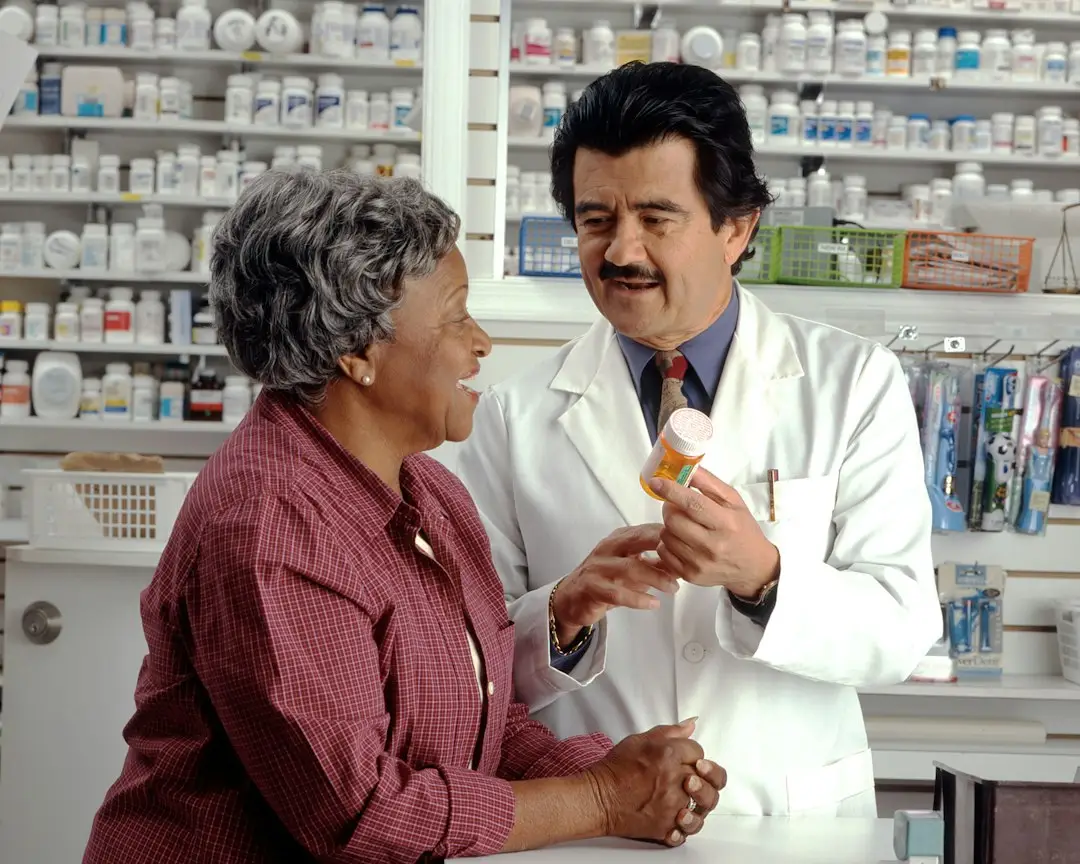
Still, a change in how a pill looks is always worth a quick check. Picture Dorothy, who has taken the same small white pill for years. One day it is yellow. Instead of worrying or skipping it, she calls the pharmacy. You can say: “My pill looks different this month. Can you confirm it’s the same medicine and the same strength?” Often there is a simple explanation. But asking is how mix-ups get caught, and pharmacists are glad to check.
Why generic medicines usually cost less
Brand-name drug companies run costly clinical trials to show a new medicine is safe and works. The FDA explains that generic drug companies do not need to repeat those trials. Instead, they show that their product is equivalent to the brand.[2] That saves a lot of money up front.
Competition matters too. The FDA reports that a single generic competitor can lead to price drops of about 30%. Having five generics competing is linked to price drops of nearly 85%.[1] The FDA also cites an estimate that generics saved the U.S. health care system $2.2 trillion from 2009 to 2019.[1]
Not every brand-name drug has a generic version.[2] If you want to look it up yourself, the FDA points to a database called the Orange Book.[2] For most people, though, the simplest route is to ask your pharmacist. They can check in seconds.
How generic medicines fit into your drug plan
Most drug plans sort medicines into groups called tiers. Medicare.gov explains that a plan’s list of covered drugs is called a formulary. A drug in a lower tier generally costs you less than a drug in a higher tier.[4] The lowest tier usually includes most generic drugs.[4]
That is especially useful to know right now, during Medicare Open Enrollment. Do you fill a lot of generic prescriptions? Medicare.gov suggests looking for plans with no or low copays for generics.[4] It also recommends talking with your provider to find out whether a generic version of a drug would work for you.[4]
Maybe you need a medicine that sits on a high tier and costs too much. Then you or your prescriber can ask the plan for a tiering exception. Your prescriber has to send a statement explaining the medical reason.[4] And if your medicine is brand-only, the SynquUp Medication Copay Finder can help you look for assistance programs.
What about biosimilars?
Some medicines are a type called biologics. Instead of a generic, a biologic can have what is called a biosimilar.
The FDA describes a biosimilar as highly similar to a biologic the FDA has already approved. It has no clinically meaningful differences from that original product.[3] Some biosimilars are also approved as interchangeable. That means they may be substituted at the pharmacy without checking with the prescriber. Whether a pharmacist can make that swap depends on state law.[3] If you take a biologic, you can ask: “Is there a biosimilar for this, and would it make sense for me?”
Tru-Tips: When you pick up a refill, take ten seconds at the counter to look at the pills before you leave. If something looks new, ask right then. It is a lot easier than calling back later.
Questions to ask your pharmacist or prescriber
Bring your full medicine list and try a few of these:
- “Is there a generic or biosimilar version of any of my medicines?”
- “Would a generic work for me, or is there a reason I should stay on the brand?”
- “Which of my medicines are on the lowest tier of my plan?”
- “If no generic exists, are there assistance programs that could help?”
Your prescriber may have good reasons for choosing a specific version of a medicine, so talk it through together. The goal is not to switch everything. The goal is to make sure you are not paying more than you need to.
If something feels off
If you notice a change after a new version of your medicine, do not just stop taking it. The FDA recommends talking with your doctor or pharmacist.[2] You can also report a problem to the FDA, even if you are not sure the medicine caused it.[2] Reports like these help the FDA spot issues and take action.
One Tru Step: At your next pharmacy visit, hand over your medicine list and ask, “Are any of these available as a generic or on a lower tier of my plan?”
Let’s talk
Has a pharmacist ever helped you save money on a medicine? What did you ask, or what do you wish you had known sooner? Share your tip in the comments so others can try it too.
Sources and further reading
- U.S. Food and Drug Administration: Generic Drug Facts
- U.S. Food and Drug Administration: Generic Drugs: Questions and Answers
- U.S. Food and Drug Administration: Biosimilars Basics for Patients
- Medicare.gov: How Drug Plans Work
Sources checked October 25, 2026. General education; individual care and coverage questions require an appropriate professional.
Related Health Hubs
Join the conversation 💬
This is your space. Share a tip that helped you, ask the question you have been wondering about, or cheer on someone going through the same thing. Your comment shows up right away, and no account is needed.
Our house rules (they keep this a feel-good spot): Be kind. Stay on topic. Keep it free of religion, politics, and anything hurtful. Comments that break these rules are removed.
Protect your privacy: Use a first name or nickname, and skip full names, phone numbers, and personal health details.
If you or someone you know is in crisis, call or text 988. In an emergency, call 911.