

✔ Backed by: National Cancer Institute · American Cancer Society · Centers for Disease Control and Prevention (CDC) · Children’s Oncology Group · InsureKidsNow.gov. Each fact links to its source, and the full list is at the bottom of this post.
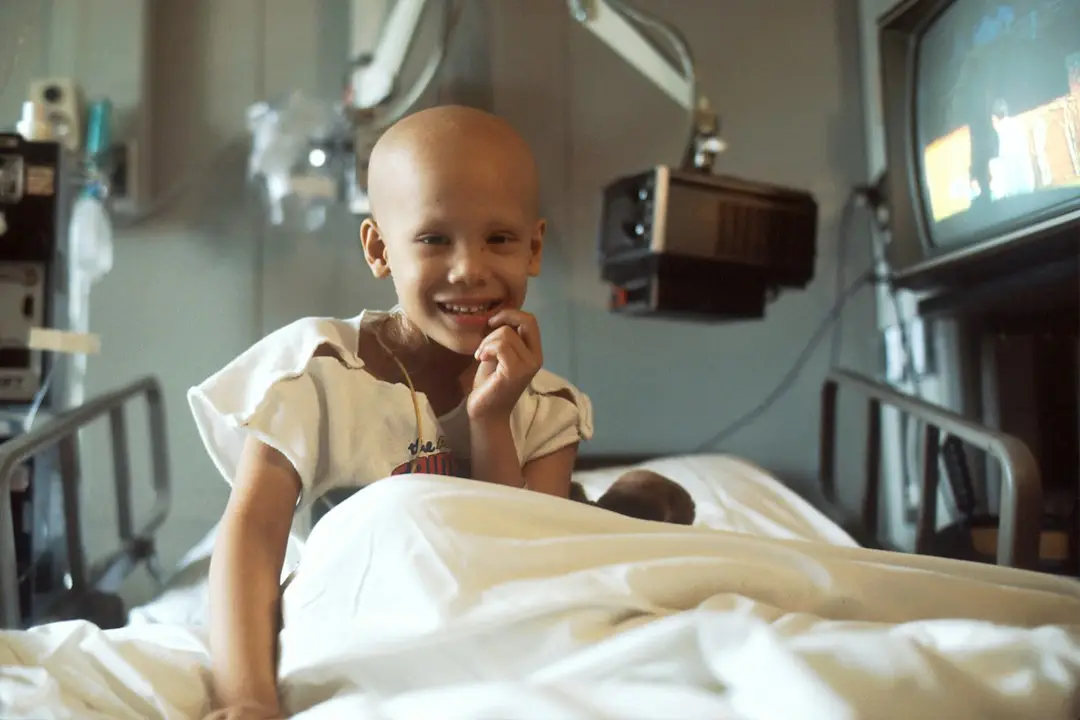
Imagine sitting in a small hospital room. A doctor you met an hour ago has just said the word “cancer” about your child. Everything after that sounds far away. You nod, but you can’t remember a single thing that was said. Later, in the parking lot, a hundred questions about childhood cancer hit you at once.
If you have lived anything like that moment, or you love someone who has, this post is for you. September is Childhood Cancer Awareness Month. Cancer in children is rare, but it is the leading cause of death from disease among children past infancy. Here is the hopeful part: survival has improved a great deal over the past decades, and many children are cured [1]. Let’s talk about what helps, one step at a time.
Trusting your gut about childhood cancer signs
The most common cancers in children and teens are leukemias, brain and spinal cord tumors, and lymphomas. The type often depends on age. Leukemia is more common in children ages 1 to 4, and lymphoma is more common in teens ages 15 to 19 [4].
Early signs can be hard to spot because they look like common childhood illnesses. It is much more likely that a symptom is caused by something other than cancer [5]. That is reassuring. But it can also leave parents feeling unsure about when to push. Possible signs include:
- A lump or swelling in the belly, neck, chest, arm, or leg
- Pale skin, low energy, or low appetite and weight loss
- Easy bruising or bleeding
- Fevers, frequent infections, or heavy night sweats
- Bone pain, or a young child who limps or will not walk
- Headaches with nausea or vomiting, vision changes, balance problems, or seizures [5]
If a sign or symptom does not get better or go away, take your child to a doctor to get checked [5]. For a seizure, trouble breathing, or any emergency, call 911.
Some parents worry about being “that parent” who keeps coming back. You know your child best. If something still seems off, it is okay to say so:
You: “We were here two weeks ago, and the bruising and tiredness haven’t gone away. I’m still worried. What else could we check?”
That is not being pushy. That is being a parent.
In those first days: lean on the whole team
Children with cancer do best when treated at a center with a team that focuses on children’s cancer [1]. Many of these teams also offer clinical trials, which are a common part of children’s cancer care [2]. Ask your child’s team whether a trial is an option.
The doctors are only part of the team. Children’s cancer centers often have social workers, child life specialists, psychologists, and school liaisons. Ask for them by name. They can help explain treatment to your child at their level, help your child keep up with school, support brothers and sisters, and help with lodging, travel, and bills [3].
Many parents don’t ask because they think, “Other families need it more,” or “I should be able to handle this.” Please ask anyway. These people are there for you. Here is a simple way to start:
You: “Who is our social worker, and how do we reach them?”
Then: “Is there a child life specialist who can help explain this to my daughter?”
And: “Who can I talk to about bills, travel, and time off work?”
It also helps to start a folder or binder early, for test results, the treatment plan, and bills. Ask for a copy of your child’s treatment summary, including the medicines, any radiation, and surgeries. You will need this later.
The fever rule every caregiver should know
Chemotherapy can make it harder for the body to fight germs. During chemotherapy, a fever of 100.4°F (38°C) or higher is a medical emergency. Call the doctor right away [6]. If you go to an emergency room, tell the staff at check-in that your child is getting chemotherapy [6].
Ask your child’s team for their 24-hour phone number and their plan for fevers. Keep both on your phone and on the fridge, where grandparents and babysitters can see them too. It can feel strange to call in the middle of the night over “just a fever.” With chemo, it is exactly the right call. Does everyone who watches your child know this rule?
“Did I cause this?”
This is one of the hardest questions, and many parents carry it quietly. Was it something I fed them? Something I missed? Here is what is known. Experts have found it very hard to identify outside causes of childhood cancer. Only about 8% to 10% of childhood cancers are caused by an inherited gene change [4].
If you carry guilt or worry, share it with your child’s social worker or psychologist. You do not have to hold it alone. What would you say to a friend who asked you that same question? You might offer yourself the same kindness.
Brothers and sisters need care too
When one child is sick, the others can feel scared, left out, or even guilty for being jealous. Tell them the truth in words that fit their age. Let them know the cancer is not their fault and they cannot catch it. Keep some of their normal routines, like school and activities. Ask a trusted adult to spend one-on-one time with them, and let their teachers know what is going on at home. NCI’s free booklet, Children with Cancer: A Guide for Parents, covers getting organized, coping, and helping brothers and sisters [7].
A simple talk might sound like this:
You: “Your brother is sick, and the doctors are working hard to help him. Nothing you did or said made this happen.”
Your daughter: “Can I catch it?”
You: “No, you can’t catch it. And you can ask me anything, any time.”
When friends ask, “What can I do?”
People will offer help. It can be hard to say yes. Try keeping a list of friends who offered, and give each one a real task: a meal, a school pickup, a load of laundry. Specific asks are easier for everyone.
And please care for yourself too. Parents and caregivers need rest and support. Ask the team about counseling and parent support groups. If you feel hopeless, call or text 988.
Help with costs and questions
Money worries can pile on fast. Medicaid and CHIP offer free or low-cost health insurance for kids and teens. Income limits vary by state. Call 1-877-KIDS-NOW (1-877-543-7669) to learn more [10]. Your hospital may also have a financial counselor or social worker who can help with bills, travel, and time off work.
If you have questions and just want clear information from a trusted source, the National Cancer Institute’s Cancer Information Service is free and confidential. Call 1-800-4-CANCER (1-800-422-6237), Monday to Friday, 9 a.m. to 9 p.m. Eastern time, in English or Spanish [8].
Life after treatment
The last day of treatment can bring mixed feelings: relief, and also fear. Some treatments can cause health problems years later. Childhood cancer survivors need long-term follow-up care, often through a survivorship clinic [1]. The Children’s Oncology Group has long-term follow-up guidelines that help clinicians check survivors for late effects of treatment [9].
When treatment ends, ask the team for a survivorship care plan. Share the plan and the treatment summary with every new doctor, including when your child moves to adult care. One day, your child will carry that folder on their own.
Let’s talk
Now it’s your turn. We would love to hear from you in the comments below.
If your family has faced childhood cancer, what is one thing you wish someone had told you in the first week?
What helped brothers and sisters feel included and cared for?
When friends asked, “What can I do?”, what kind of help meant the most?
One Tru Step: Ask your child’s care team, “Who is our social worker, and how do we reach them?”
Sources and further reading
- NCI: Childhood Cancers
- NCI: Find a Cancer Clinical Trial
- NCI: Managing Costs and Medical Information
- NCI: Cancer in Children and Adolescents
- American Cancer Society: Finding and Diagnosing Cancer in Children
- CDC: Watch Out for Fever (Preventing Infections in Cancer Patients)
- NCI: Children with Cancer: A Guide for Parents
- NCI: Cancer Information Service Contact Center
- Children’s Oncology Group: Survivorship Guidelines
- InsureKidsNow.gov: Medicaid and CHIP Coverage
Sources checked October 10, 2026. General education; individual care and coverage questions require an appropriate professional.
Related Health Hubs
Join the conversation 💬
This is your space. Share a tip that helped you, ask the question you have been wondering about, or cheer on someone going through the same thing. Your comment shows up right away, and no account is needed.
Our house rules (they keep this a feel-good spot): Be kind. Stay on topic. Keep it free of religion, politics, and anything hurtful. Comments that break these rules are removed.
Protect your privacy: Use a first name or nickname, and skip full names, phone numbers, and personal health details.
If you or someone you know is in crisis, call or text 988. In an emergency, call 911.